How MEV Blocker works
MEV Blocker's order flow auction protects user transactions from frontrunning and sandwich attacks—the worst types of MEV—by sending transactions to a private mempool of trusted searchers.
MEV Blocker aims to diminish all the MEV that hurts or goes against the user, while maximizing the MEV that can work to the advantage of the user.
Without MEV Blocker
Ethereum's default mempool is a wild west where MEV bots (searchers) can exploit transactions of unsuspecting traders (your users), taking their money bit by bit over time.
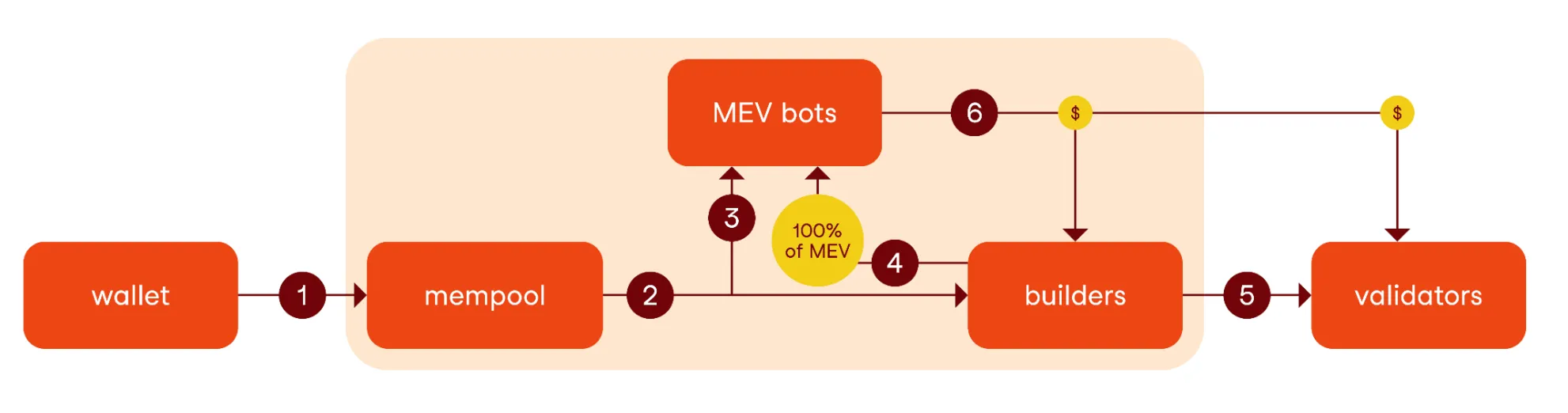
- The wallet submits user-initiated transactions to the public mempool.
- Anyone can view mempool transactions: builders select them based on fees and value.
- MEV bots exploit mempool transactions for profit, targeting slippage exploitation.
- MEV bots create bundles and submit them to builders with a bribe to enforce the order.
- Builders assemble the most valuable bundles to create the most profitable block for validators.
- Validators choose the most valuable block from builders to maximize earnings. Once selected, all transactions (user, MEV, bribes) are executed onchain.
With MEV Blocker
The structured mempool incentivizes searchers to bundle transactions for builders so they're included in the next block without frontrunning or sandwiching traders (by giving searchers a cut of backrun opportunities).
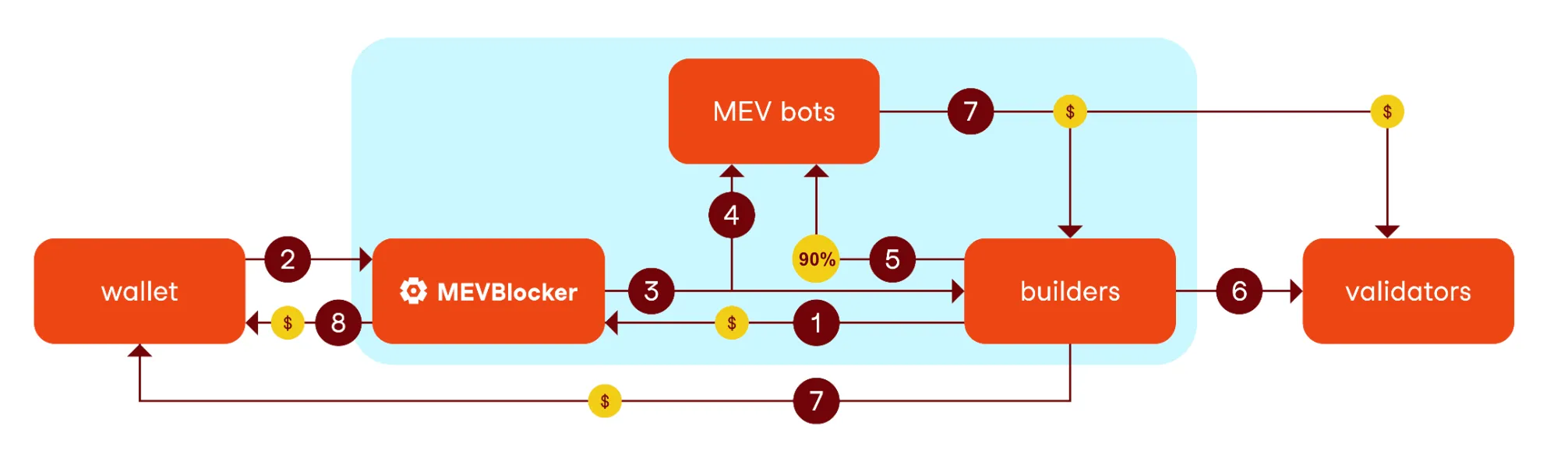
- Builders must pay MEV Blocker fees to access MEV Blocker transaction flow. For details, see Fees mechanics.
- The wallet submits user-initiated transactions to MEV Blocker's virtual mempool.
- Connected builders can access MEV Blocker flow and select transactions based on fees and value.
- MEV Blocker shares transactions with searchers via backrun bundles, returning 90% to the user.
- MEV bots create bundles and submit them to builders with a bribe to enforce the order.
- Builders assemble the most valuable bundles to create the most profitable block for validators.
- Validators choose the most valuable block from builders to maximize earnings. Once selected, all transactions (user, MEV, bribes) are executed onchain.
- MEV Blocker shares 50% of builder fees with wallet flow originators.
📄️ How MEV Blocker works
How the MEV Blocker service works, compare user outcomes with and without MEV Blocker.
📄️ Gas rebates
Learn how MEV Blocker recovers priority fees and provides gas rebates.
🗃️ MEV attack types
3 items
📄️ Order flow auction
Understand MEV Blocker's order flow auction mechanism. Learn how transactions are protected from MEV attacks and how users earn rebates.
🗃️ Builders
1 item